Muscle Shoals
'Muscle Shoals: The Hit Capital’s Heyday & Beyond'
by C.S. Fuqua
From Dexter Johnson’s garage studio to James Joiner’s 'A Fallen Star', Tune Records to FAME and Muscle Shoals Sound studios, from Aretha Franklin to the Rolling Stones and the Black Keys, from the beginning to present day—Muscle Shoals: The Hit Capital’s Heyday & Beyond chronicles the history of the Shoals’ Music industry, an industry in the 'middle of nowhere' that produced many of the most celebrated and enduring songs of all time.
Over the decades, Muscle Shoals’ musical reach has proved extraordinary, influencing musicians worldwide. The book’s final chapter explores the area’s global influence and inspiration through the career of Belgian rocker JD Fox, who has made several pilgrimages to the area and recorded a tribute CD honoring Shoals’ songwriter Spooner Oldham.
Much has been written about the Muscle Shoals music industry and even a documentary movie produced, most accounts crediting the area’s phenomenal success to some mystical power divined from the Tennessee River. Myth makes for good drama, but Muscle Shoals: The Hit Capital’s Heyday & Beyond details the true source of the industry’s success: the tenacious determination of talented individuals obsessed with the desire to make a difference in music.
And what a difference they made…
For more information and to purchase this book, please visit bol.com, amazon and other online shops or go to csfuqua.com
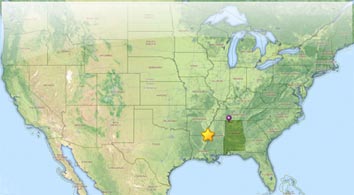
Muscle Shoals is one of four municipalities known as the Quad Cities, the others being Florence, Sheffield and Tuscumbia. All of them are situated on the banks of the Tennessee River in the northwest corner of Alabama. Some 65.000 people live in the four cities, an area in which the primary industries include textiles and aluminum production.
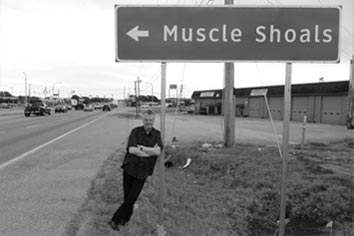
Muscle Shoals is known for recording many hit songs in the late 1950's and throughout the 1960's at Rick Hall's FAME Studios at 603 East Avalon. Artists who recorded there included Wilson Pickett, Aretha Franklin and Joe Tex. The session musicians who worked at the studio became known as the Muscle Shoals Rhythm Section. In 1969, members of the rhythm section left to found a rival studio, the Muscle Shoals Sound Studio at 3614 Jackson Highway. It developed work for Bob Dylan, Rod Stewart, The Rolling Stones and countless others.
What is most unusual, musically speaking, is the cross-pollination of musical styles that originated in Muscle Shoals. Black artists from the area such as Arthur Alexander and James Carr utilized white country music styles in their work and white artists from the Shoals frequently borrowed from the blues/gospel influences of their black contemporaries, creating a distinct sound, which is often referred to as the Muscle Shoals Sound.
by C.S. Fuqua
From Dexter Johnson’s garage studio to James Joiner’s 'A Fallen Star', Tune Records to FAME and Muscle Shoals Sound studios, from Aretha Franklin to the Rolling Stones and the Black Keys, from the beginning to present day—Muscle Shoals: The Hit Capital’s Heyday & Beyond chronicles the history of the Shoals’ Music industry, an industry in the 'middle of nowhere' that produced many of the most celebrated and enduring songs of all time.
Over the decades, Muscle Shoals’ musical reach has proved extraordinary, influencing musicians worldwide. The book’s final chapter explores the area’s global influence and inspiration through the career of Belgian rocker JD Fox, who has made several pilgrimages to the area and recorded a tribute CD honoring Shoals’ songwriter Spooner Oldham.
Much has been written about the Muscle Shoals music industry and even a documentary movie produced, most accounts crediting the area’s phenomenal success to some mystical power divined from the Tennessee River. Myth makes for good drama, but Muscle Shoals: The Hit Capital’s Heyday & Beyond details the true source of the industry’s success: the tenacious determination of talented individuals obsessed with the desire to make a difference in music.
And what a difference they made…
For more information and to purchase this book, please visit bol.com, amazon and other online shops or go to csfuqua.com
Muscle Shoals is one of four municipalities known as the Quad Cities, the others being Florence, Sheffield and Tuscumbia. All of them are situated on the banks of the Tennessee River in the northwest corner of Alabama. Some 65.000 people live in the four cities, an area in which the primary industries include textiles and aluminum production.
Muscle Shoals is known for recording many hit songs in the late 1950's and throughout the 1960's at Rick Hall's FAME Studios at 603 East Avalon. Artists who recorded there included Wilson Pickett, Aretha Franklin and Joe Tex. The session musicians who worked at the studio became known as the Muscle Shoals Rhythm Section. In 1969, members of the rhythm section left to found a rival studio, the Muscle Shoals Sound Studio at 3614 Jackson Highway. It developed work for Bob Dylan, Rod Stewart, The Rolling Stones and countless others.
What is most unusual, musically speaking, is the cross-pollination of musical styles that originated in Muscle Shoals. Black artists from the area such as Arthur Alexander and James Carr utilized white country music styles in their work and white artists from the Shoals frequently borrowed from the blues/gospel influences of their black contemporaries, creating a distinct sound, which is often referred to as the Muscle Shoals Sound.
- Bowman, Rob. Soulsville, U.S.A.: The Story of Stax Records.
New York: Schirmer Books, 1997. - Fuqua, C.S. Alabama Musicians: Musical Heritage from the Heart of Dixie.
Charleston, SC: The History Press, 2011.
Read more - Guralnick, Peter. Sweet Soul Music: Rhythm and Blues and the Dream of Southern Freedom.
New York: Harper & Row, 1986. - Hoskyns, Barney. Say It One Time for the Broken Hearted.
London: Fontana Books, 1987. - Danchin, Sebastian. Muscle Shoals, capitale secrète du rock et de la soul..
Paris: Les Cahiers du Rock, 2007.